

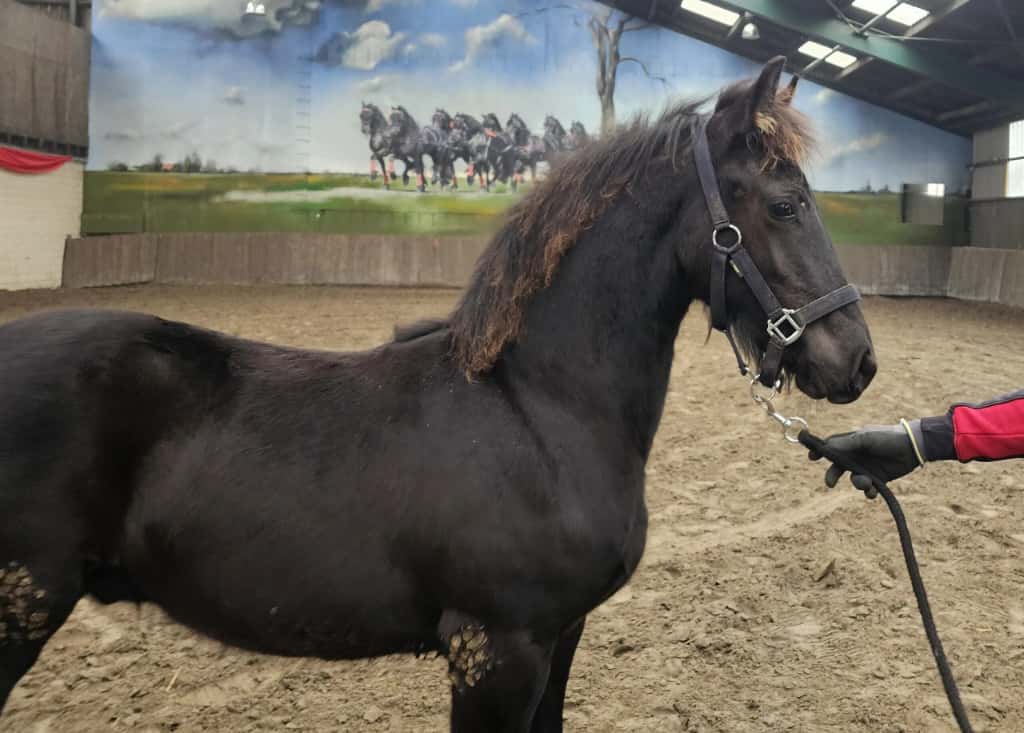
Managing Megaesophagus and Aortic Rupture: A Caretaker’s Guide to Friesian Longevity
Friesian horses are admired for beauty, temperament, and presence, but responsible ownership also means understanding breed-linked health risks. This guide explains Friesian horse genetic testing, lifespan considerations, megaesophagus, aortic rupture, and how breeders can help prevent hydrocephalus in foals.
Quick Facts
- CategoryFriesian Horse Health Guide
- Read Time5 min
- Published3/18/2026
Loving a Friesian Means Learning the Breed Beyond the Beauty
Friesian horses have an unmistakable presence. Their flowing mane, black coat, proud movement, and kind expression make them one of the most admired breeds in the world. But anyone serious about Friesian ownership must understand that beauty and responsibility go together. The deeper conversation is not only about elegance or price. It is also about care, genetics, and longevity. For caretakers, breeders, and buyers alike, the real question is how to support the lifespan of Friesian horses while making smart decisions about inherited risk, early warning signs, and breeding ethics. Friesian horse health is not a side topic. It is part of good horsemanship.
Why Friesian Longevity Requires a More Informed Kind of Care
The lifespan of Friesian horses is shaped by the same fundamentals that affect all horses, including nutrition, hoof care, dental care, turnout, conditioning, and veterinary support. But Friesians also have breed-specific concerns that deserve more attention than many casual buyers realize. Research and breed-association materials have long noted inherited disorders in the breed, including hydrocephalus and dwarfism, while scientific work has also explored possible hereditary involvement in megaesophagus and aortic rupture. This means Friesian longevity is not just about routine care. It is also about knowing which questions to ask before purchase and which warning signs never to ignore.
Friesian Horse Genetic Testing Is One of the Most Important Preventive Tools
One of the clearest advances in Friesian health management has been the development and use of Friesian horse genetic testing for hydrocephalus and dwarfism. FHANA states that the KFPS implemented this testing and that breeding stock testing has been mandated in stages, while breeder guidance advises testing broodmares and avoiding carrier-to-carrier matings. FHANA also explains that hydrocephalus is a recessive condition and that preventing affected foals depends on informed mating choices rather than removing every carrier from breeding automatically. In practical terms, this means a responsible caretaker should ask for genetic status when evaluating breeding horses and should treat test results as part of standard due diligence.
Preventing Hydrocephalus in Foals Starts Before Breeding Ever Happens
When people search preventing hydrocephalus in foals, they are really asking how to reduce heartbreak before it begins. FHANA explains that hydrocephalus in Friesians is a simple recessive abnormality, and current guidance is to avoid mating two carriers because that pairing can produce an affected foal. The 2026 FHANA/KFPS order form states that breeders are advised to test broodmares and use results to prevent risk matings, noting that when both parents are carriers the anomalous outcome has been seen in about one out of four cases. That makes prevention less about luck and more about disciplined breeding decisions. Good breeding is not only about producing a beautiful foal. It is about refusing unnecessary genetic risk.
Megaesophagus in Friesians Deserves Calm, Observant Management
Megaesophagus is one of the more worrying conditions associated with Friesians because it can interfere with normal swallowing and raise the risk of choking, regurgitation, poor body condition, and aspiration-related complications. The exact pathogenesis is still not fully settled, but peer-reviewed research has described megaesophagus as one of the presumed hereditary traits that has received significant attention in the breed. For caretakers, the practical message is simple: recurrent swallowing difficulty, feed coming back through the nose or mouth, chronic coughing around meals, unexplained weight loss, and repeated respiratory trouble deserve urgent veterinary evaluation. A Friesian owner does not need to panic at every cough, but they should never normalize patterns that suggest the horse is struggling to move food safely.
Aortic Rupture Is Rare but Serious, and Breed Awareness Matters
Aortic rupture is another condition discussed in Friesians because of suspected connective-tissue or collagen-related factors. The scientific literature has explored whether altered collagen metabolism may help explain why Friesians appear predisposed to conditions such as aortic rupture and megaesophagus. For the caretaker, this is not a condition to manage casually at home. It is a reminder that sudden collapse, unexplained weakness, cardiovascular distress, or acute severe events require immediate veterinary attention. While owners cannot screen away every risk in day-to-day life, they can reduce preventable harm by working with veterinarians who understand the breed, by maintaining appropriate conditioning, and by keeping health records organized over the horse’s life
A Story Every Friesian Caretaker Should Understand
A small breeder once kept two stunning Friesians that seemed perfect on paper. Both were beautiful movers, both had good temperaments, and both came from admired lines. Years earlier, the breeder might have paired them and hoped for the best. But with better access to Friesian horse genetic testing, the decision changed. Testing showed a risk that made the match unwise, so the breeder stepped back and chose a safer cross instead. Around the same time, an older Friesian on the property began showing subtle trouble at feeding time, coughing after meals and losing condition despite a healthy appetite. Because the owners knew the breed’s risks, they called the veterinarian early rather than waiting. One decision protected a future foal. The other gave an existing horse a better chance at care. That is what Friesian longevity really looks like in practice. Not fear, but informed action.
What Responsible Owners and Breeders Should Do Now
For anyone invested in the lifespan of Friesian horses, the path is clear. Use genetic testing where breeding decisions are involved. Ask for documentation, not assumptions. Learn the warning signs of swallowing disorders and never dismiss repeated feeding-related symptoms. Keep a strong working relationship with a veterinarian who understands performance horses and breed-related risks. And when breeding is part of the plan, remember that preventing hydrocephalus in foals starts with mate selection, not with hope. These are not dramatic steps. They are disciplined ones, and disciplined care is what gives a remarkable breed its best chance at a longer, healthier future
Frequently Asked Questions
Ready to find your own Friesian? Browse our available Friesians.